It’s officially the Season of the Witch!
Naturally, this means I’ve been spending what I think is an entirely normal amount of time in the company of witches, vampires, ghosts, demons, supernatural detectives, and assorted creatures of the night. So basically, like I do every day, but it feels extra special because it’s HALLOWEEN!
Some people celebrate October with pumpkin spice, and sure, I’m not above a tasty PSL, or, better yet, a soothing herbal PS tea. But I often prefer something a little darker and a little richer to celebrate the season: stepping into a world where your next-door neighbor might be a werewolf, the charming little shop down the street might sell enchanted objects, and the strange door at the end of a dark alley might lead somewhere you really, really shouldn’t go.
In fact, I find a great deal of comfort in stories where ancestral curses are as real as our abilities to break them. Worlds where angels walk alongside us, as do demons. The hard part is telling which is which. Miracles can be found. For a price. As can any number of charms, wishes, or hexes. Places that blur the lines between the ordinary and the enchanted.
In other words, I’ve been indulging my love of urban fantasy.
This is the genre that made me fall in love with supernatural sleuths. It started with Jim Butcher’s Dresden Files, where Harry Dresden, Chicago’s resident wizard and private investigator, routinely finds himself tangled up in supernatural mysteries that are considerably more dangerous—and supernatural—than his clients initially let on. It also helped me cope with graduate school, where the real monsters were white supremacy and rigid perfectionism. And yeah, some genuine bloodsuckers. But I digress.
Lately, I’ve been revisiting old favorites like Tanya Huff’s Vicki Nelson novels, Simon R. Green’s Nightside series, Grimm, and Buffy the Vampire Slayer, while discovering new-to-me delights like Midnight, Texas and Sugar (which, admittedly, leans more sci-fi than fantasy). And, of course, I’ve indulged in my annual rewatching of Practical Magic and thoroughly enjoyed Practical Magic 2.
Invite all the characters from these supernatural tales to a Halloween monster bash, and you have a rather eclectic gathering of witches, monsters, vampires, detectives, wizards—and wizard detectives—and people with extremely complicated love lives.
In other words, excellent company.
The more time I spend in these worlds, the more I appreciate something peculiar about them: they make room for genuine darkness without surrendering the capacity for wonder.
And that, I think, is why I keep returning to them.
There Is Always More to the World
One of the things I love about urban fantasy is its insistence that the world we know—what we can see with the naked eye—is not necessarily the whole world.
Behind an ordinary door, beneath a familiar street, or just beyond the edges of respectable society, something extraordinary might be waiting. Sometimes it’s wonderful. Sometimes it’s horrifying. Or both. Sometimes it’s even a vampire who writes romance novels.
In Tanya Huff’s Blood Books, Vicki Nelson, a former homicide detective, investigates supernatural crimes with the help of Henry Fitzroy, a vampire who happens to write historical romance novels. Hey, even the undead need to make a living.
What I particularly love about this series is the way supernatural mysteries exist alongside the ordinary complications of being human. There are terrifying creatures and disturbing crimes, certainly, but also rent to pay, Vicki’s deteriorating eyesight, and a complicated love triangle that won’t resolve itself anytime soon.
Most importantly, the supernatural isn’t automatically evil. Sometimes the monster is the religious zealot who thinks it’s okay to hunt werewolves. And the werewolf—I’m sorry, I meant, Blutbad—next door is the one who helps you fight things that go bump in the night.
Grimm explores this same ambiguity through its own twist on classic fairy tales. In this series, an entire hidden society of supernatural beings lives beneath the surface of ordinary Portland, and Nick is a Grimm who must navigate the complicated business of protecting people from dangerous creatures while recognizing that not every supernatural being is a threat.
Ancient histories, inherited conflicts, and frightening transformations coexist with friendships, families, and neighborhood businesses. Appearances can be profoundly misleading, and the creatures we initially fear sometimes become the people we come to love most. And really, who wouldn’t want Monroe and Rosalee in their corner? And who doesn’t see them as legit couple goals?
What draws me to these stories isn’t simply the pleasure of discovering a hidden world. It’s the suggestion that reality might be considerably more complicated, mysterious, and alive than we’ve been taught to believe.
I like the idea that there is always more mystery just around the corner, always something that resists being neatly categorized or explained away. I’ve certainly had enough experiences in my life that defy the laws of conventional reality.
Of course, that also means we can’t assume that everything waiting beyond the familiar is friendly. That’s the value of these stories, too. There’s a reason we’re taught to fear the darkness. Not every mystery is an invitation, not every opportunity is as golden as it seems, and not every supernatural encounter is one we should welcome.
Seriously, I’ve walked down enough haunted streets to know that you really, truly shouldn’t knock on the door of a house with a sign that says “Do Not Enter.” I don’t care what those horror movie heroines do.
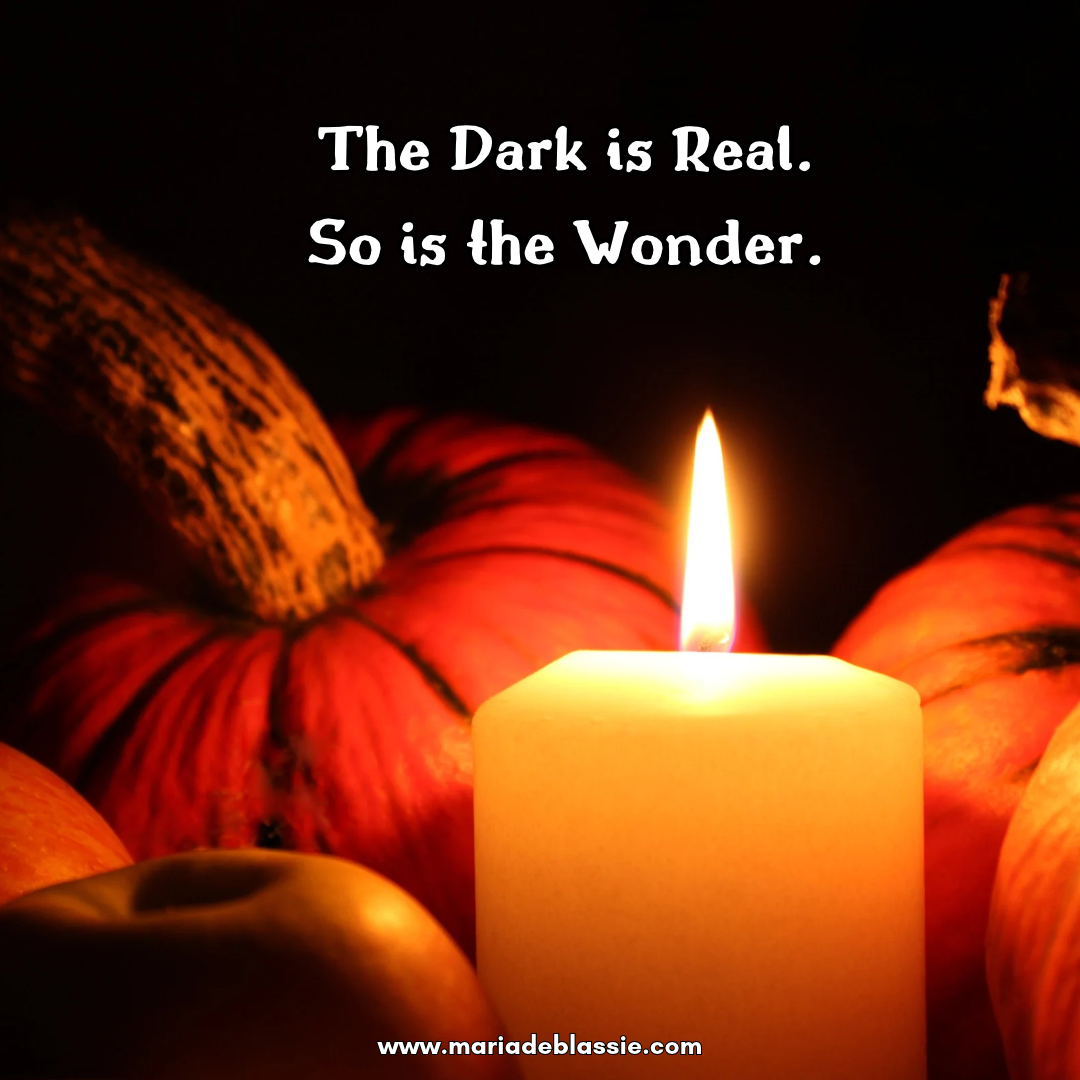
The Dark Is Real
Simon R. Green takes the hidden-world premise somewhere considerably darker in his Nightside novels. His supernatural detective, John Taylor, specializes in finding things—and people—that have gone missing in places where ordinary investigators would be wise not to venture. Concealed within London is a place where it’s always three in the morning, where all manner of beings walk the streets, and where nearly anything can be bought, though the price may be considerably higher than anyone anticipated.
Green’s Gideon Sable series offers another excursion into a fantastical London, populated by characters with names like Annie Anybody, a woman who can change her identity as needed; the Wild Card, who defies the laws of reality; and the Damned, who is… well, you get the idea.
I love the sheer imaginative extravagance of the Nightside. Its wonders are not necessarily safe, its monsters aren’t always obvious, and its darkness has a depth that resists easy reassurance that everything will turn out all right in the end.
There are genuinely terrifying things in the Nightside. But there are also luminous moments that remind us not all is lost. Or, if it is, John Taylor can find it for you. He’s good at that sort of thing.
Sure, it’s the Nightside. But isn’t that also life?
Life is full of light and dark. We are full of light and dark. Neither can be understood entirely without the other. Worse, to imagine we’ve somehow permanently banished the darkness—in ourselves or in our lives—only leaves space for it to grow quietly, insidiously, eagerly feeding in the shadows.
Or worse, we might find ourselves trapped in a Hallmark movie.
I joke.
Mostly.
The best supernatural stories understand this interplay between light and dark. Buffy the Vampire Slayer certainly did. Buffy and her friends face literal monsters, but the existence of vampires, demons, and an occasional apocalypse doesn’t make the ordinary difficulties of living any less important. Friendship, love, family, desire, heartbreak, bad decisions, and the occasional catastrophic date all continue, even when the end of the world is scheduled for Friday.
The show’s humor is part of its brilliance. Buffy and her friends can be gloriously irreverent in the face of terrifying things, but the jokes don’t make their losses or fear inconsequential. Instead, the humor heightens the stakes, making the darkness feel all the more real.
While Sugar belongs more comfortably to science fiction and detective noir, it offers another variation on this tension. Its mysteries expose some particularly ugly aspects of human behavior. Yet what I find most appealing about John Sugar is his extraordinary appreciation of humanity. He loves movies, finds beauty in ordinary experiences, and still sees something worthwhile in people who have fallen on hard times. He encounters plenty of darkness without allowing it to extinguish his affection for the world.
The same is true of Practical Magic, a story that remains especially dear to me. The Owens women inhabit a world shaped by ancestral curses, grief, violence, dangerous magic, and the consequences of choices made long before they were born. And yet theirs is also a world of sisters and aunts, romantic longing, family loyalty, glorious kitchens, beautiful houses, and midnight margaritas.
And fabulous wardrobes. We mustn’t overlook the fabulous wardrobes.
I find it hysterical that the original Practical Magic film was criticized for being all over the place tonally. It’s dark. It’s funny. It’s romantic. It’s witchy. It’s mysterious. It’s thrilling and scary. It’s heartbreaking, and it’s hopeful. Throw it all into the cauldron, give it a good stir, and you’ve got something that looks an awful lot like living.
Except maybe the part about burying your sister’s ex in the backyard. Unless it does.
I admit to nothing.
Moving on…
I think we sometimes want our stories, like our lives, to be more orderly than they really are. We want darkness to be something we can identify, defeat, and leave behind. We want the monster to look like a monster. We want the curse to have a simple solution. And we want reality to fit into a tiny box.
But life has a rather inconvenient—and delightful—habit of refusing to stay inside the boxes we construct for it.
And that’s partly what makes the unknown so frightening. We don’t know what’s waiting around the corner, what might emerge from the shadows, or whether opening that mysterious door will lead to something wonderful or something we’d rather never have encountered.
Darkness doesn’t always arrive with fangs, glowing eyes, or a dramatic musical cue. Sometimes it hides behind perfectly respectable appearances. Sometimes it takes the form of an inherited curse, a destructive pattern, or the harm people inflict while convinced they’re doing the right thing. And sometimes it lies not in the unfamiliar or the unknown, but in our fear of what we don’t understand—and our desire to control it.
But uncertainty works both ways. If we can’t know what dangers the future holds, we can’t know all its possibilities, either. The unknown may conceal something terrible, certainly. But it may also hold unexpected beauty, extraordinary encounters, and wonders beyond anything we could have imagined.
Allowing darkness to become the only thing we see has its own dangers. And frankly, a world where darkness gets the final word sounds terribly boring. That’s why I’ve never enjoyed grimdark fantasy. Who wants to inhabit a world where we already know that everything is going to be terrible? Where’s the mystery in that? Where’s the joy? And what’s the point of telling stories if we’ve already decided that nothing good can possibly happen?
So Is the Wonder
And that’s what makes these stories so interesting to me. Even in their darkest moments, they leave room for something else:
Wonder. Hope. Possibility.
Not necessarily the reassuring kind. Sometimes wonder is strange, unsettling, and difficult to distinguish from terror. It asks more of us than we expected, breaking us open until we can’t go back to our smaller way of being. This is the territory of awe and the sublime, where beauty and terror sometimes meet. We encounter something so vast, mysterious, or extraordinary that it exceeds our ability to comprehend it.
There is also the wonder of finding a friend in an unlikely creature, discovering that the world contains possibilities we hadn’t imagined, falling in love when love seems impossible, or stumbling upon a place where we might belong, as if some unseen force has been pulling us there all along.
That’s what makes the TV series Midnight, Texas so appealing to me (and why I've started reading the books). In a small town populated by vampires, witches, ghosts, and assorted supernatural outsiders, being unusual is practically a prerequisite for residency. Its inhabitants are secretive, wounded, occasionally dangerous, and frequently burdened by histories they’d rather forget.
And yet, together, they create something resembling home.
There’s loyalty, affection, unexpected tenderness, and the possibility of redemption. The darkness in their histories doesn’t have to define who they become. The series also has a wonderful sense of humor about the many forms evil can take. In the first season, all hell quite literally threatens to break loose. In the second, the residents face a sinister New Age spiritualist offering miraculous cures that seem far too good to be true.
Honestly, it’s difficult to say which is more frightening.
I find myself drawn to these fictional communities. They’re not utopias. Their inhabitants are frequently difficult, complicated, and far from innocent. Yet relationships form across differences that initially seem impossible to bridge. That’s what I love most about urban fantasy. Its worlds are haunted, dangerous, and full of mysteries, but they’re also crowded with life. Mundane dramas. Emotional turmoil. Unlikely alliances. Eccentric families. Complicated friendships.
And a good cup of coffee or a midnight margarita.
For all their fantastical elements, these stories of gods and monsters are all about what it means to be human. So give me the haunted streets, the dangerous magic, the impossible romances, the eccentric families, and the frightening creatures who turn out to be friends. Give me the strange doors that might lead somewhere wonderful—or a rabbit hole it’s best not to go down.
I’ll keep my wits about me.
And I’ll keep looking for wonder.
And isn’t that part of what makes Halloween so wonderful? We dress up as the things that frighten us, tell ghost stories, light candles, and invite the monsters to the party.
We make room for a little darkness, a little light, and a whole lot of play.
Happy Halloween, witches, wizards, and other magical beings! 🖤
Enchantment Learning & Living is an inspirational collection of musings touching on life’s simple pleasures, everyday fantasy, and absolutely delectable recipes that will guarantee to stir the kitchen witch in you. If you enjoyed what you just read and believe that true magic is the everyday, subscribe here.
Want even more inspiration to make your dream life a reality? Follow me on Facebook, Pinterest, and Instagram. Thanks for following!